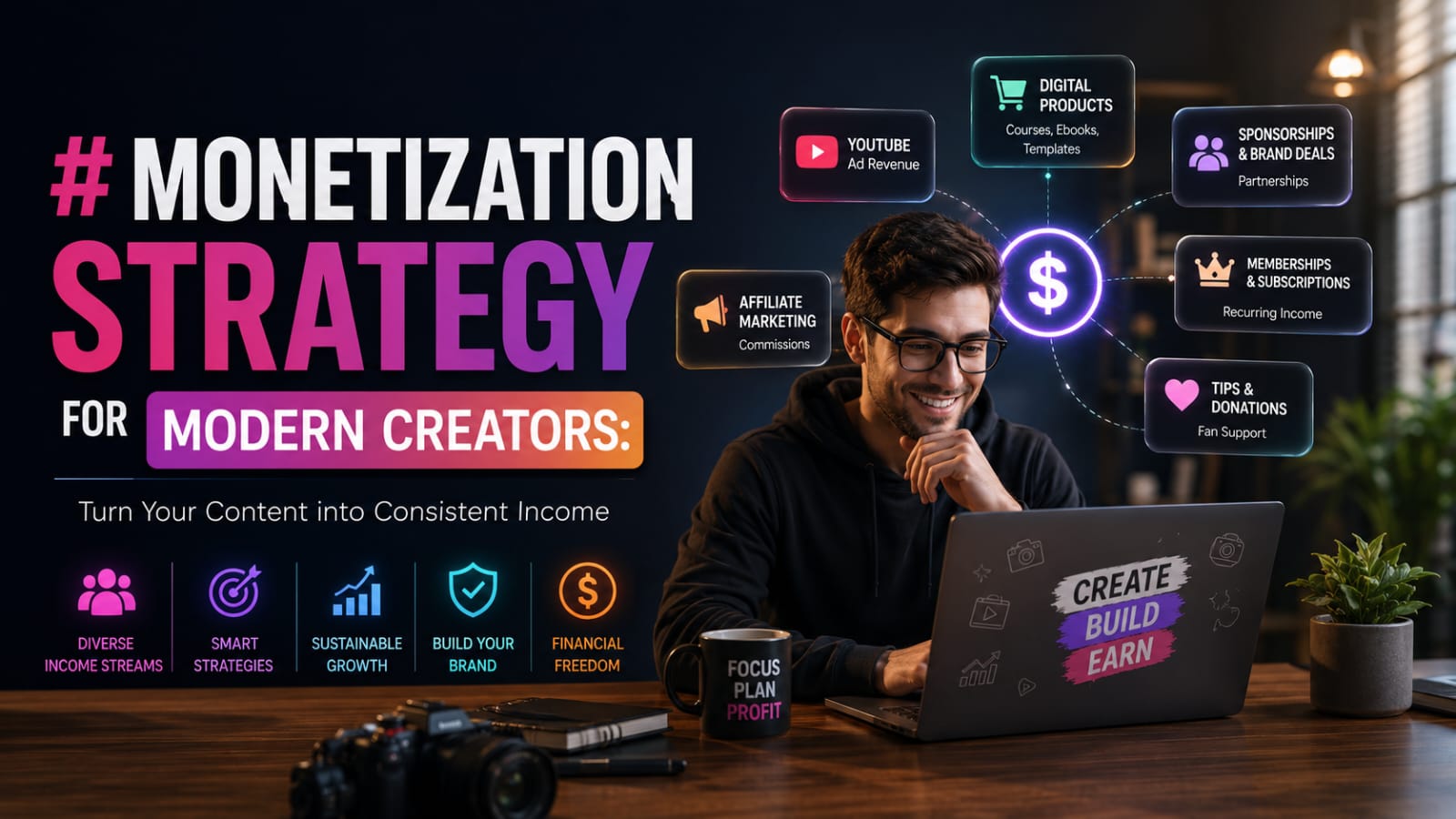
The creator economy has grown into a market worth well over $200 billion, yet most people making content still aren't earning a living wage from it. The gap isn't talent or effort — it's strategy. Creators who treat monetization as a system with multiple, deliberately chosen revenue streams consistently outearn creators relying on a single source, no matter how large their audience is.
This guide breaks down what an actual monetization strategy looks like in 2026: which revenue streams are worth building, how to sequence them, and how to avoid the mistakes that keep talented creators stuck at inconsistent income.
Why "Post and Hope" Doesn't Work Anymore
For years, the default creator strategy was simple: grow a following, wait for platform ad revenue or brand deals to show up, repeat. That model is breaking down for a few clear reasons.
- Reach is unreliable. A large share of creators now cite declining or unpredictable organic reach as their top business concern, since algorithm changes can cut visibility overnight with no warning.
- Platform income rarely covers a living wage. Ad-revenue programs pay small amounts per thousand views, and even consistent posting schedules often don't add up to sustainable income on their own.
- You don't own the relationship. Followers belong to the platform's database, not yours. If an account gets restricted, deprioritized, or banned, the audience — and the income tied to it — can disappear with it.
The creators pulling ahead have responded by shifting the goal from "grow the biggest audience" to "convert the audience I have into owned, recurring relationships." That single shift changes almost every decision downstream.
The Revenue Streams Worth Building
Not all income sources are equal. Some are great for discovery and cash flow early on; others are what actually make a creator business durable. Here's how the main options stack up.
| Revenue Stream | Stability | Best For |
|---|---|---|
| Platform ad revenue (YouTube, TikTok, Shorts) | Low–Medium | Early cash flow while building an audience |
| Brand sponsorships & affiliate deals | Medium | Higher one-off payouts once engagement is proven |
| Paid memberships / subscriptions | High | Predictable, compounding monthly income |
| Digital products (courses, templates, presets) | Medium–High | High margins, scalable without extra time per sale |
| Paid community (Discord, Circle, WhatsApp groups) | High | Deep engagement and strong retention with an audience that already trusts you |
| Physical products / merch | Medium | Brand-loyal audiences who want to represent your identity |
Recurring models like memberships and paid communities tend to win on stability because they compound — each new subscriber adds to a base that persists month after month, instead of resetting with every new post the way ad revenue does. Project-based income like sponsorships and digital products fills the gaps and often produces the bigger single payouts. A resilient creator business usually blends all three types rather than picking just one.
Build the Stack in the Right Order
Trying to launch a course, a membership, and a merch line all at once is how most creators burn out before any of it gains traction. Sequencing matters.
- Prove the audience wants something. Use low-commitment offers first — an affiliate link, a small digital download, a single paid workshop — to see what people will actually pay for before building anything bigger.
- Move your best fans off the platform. Start collecting emails or inviting engaged followers into a free community. This is the audience you'll actually own.
- Launch one recurring offer. A membership, subscription, or paid community built around your strongest content theme. This becomes the stable core of your income.
- Layer in higher-effort products. Courses, cohorts, or physical products once you know exactly what your audience values enough to pay a premium for.
- Keep sponsorships as a bonus, not a foundation. Brand deals are great supplemental income, but building a business that depends on them means your income rises and falls with campaigns you don't control.
Where Visibility Still Fits In
None of this works without an audience to convert in the first place — social discovery is still how the large majority of creators get found, even as the industry shifts toward owned channels. Reach and monetization aren't competing priorities; reach is the top of the funnel that feeds everything else.
That means the basics still matter: consistent posting, gradual and genuine follower growth, and engagement that looks natural rather than inflated. A creator with steady, real engagement converts better into paying subscribers than one with a large but passive following, because brand partners and platform algorithms alike increasingly weigh engagement quality over raw numbers. Tools that support gradual, natural-looking growth on Instagram, TikTok, YouTube, and other platforms — the kind offered through FollowSMM's growth services — can help creators build that initial visibility layer, but they work best as a supplement to real content and a genuine conversion path, not a replacement for either.
Common Mistakes That Stall Monetization
- Relying on one income source. A single platform's ad program or a single sponsor relationship can vanish without warning.
- Launching a membership before proving demand. Skipping the validation step often means low conversion and quiet, discouraging launches.
- Ignoring email or community-building. Every day without an owned channel is a day of audience that could disappear with an algorithm change or account issue.
- Underpricing recurring offers. Pricing too low to "not scare people off" usually just delays sustainable income and undervalues real expertise.
- Treating content and business as separate jobs. The strongest monetization strategies grow directly out of what an audience already engages with — not a bolted-on offer that doesn't match the content.
Frequently Asked Questions
What is the best monetization strategy for a new creator?
Start with one platform-native income source to validate demand, then move quickly toward an owned channel like email or a paid community, since audience ownership is what protects income from algorithm changes.
How many income streams should a creator have?
Most sustainable creator businesses run on three to five income streams that combine at least one recurring source, one project-based source, and one platform-native source, rather than relying on a single stream.
Are subscriptions better than sponsorships for creators?
Subscriptions tend to produce more predictable, compounding income over time, while sponsorships can pay more per deal but fluctuate and depend on brand budgets and platform reach.
Does follower count still matter for monetization in 2026?
Follower count still matters as a visibility and credibility signal that helps a creator get discovered and considered for deals, but it is only useful when it is paired with genuine engagement and a clear conversion path into an owned revenue stream.
Build the Visibility Behind Your Strategy
Real followers, gradual delivery, and engagement that supports your monetization funnel — see how FollowSMM helps creators grow the foundation their strategy depends on.
Explore FollowSMM Services →